
How can one determine whether a set of strings has a uniform tension profile once they have been installed and brought up to tension?
How can I tell whether I have achieved a state of “equal tension” or “equal feel” across my set?
It should be noted here that in the case of “equal tension” (a method that is both historically incorrect and ill-advised), the higher-pitched strings are under less tension than the lower-pitched ones while being played..
Conversely, with “equal feel,” all strings are under the same amount of tension while being played.
I propose a simple visual method that allows for a pairwise assessment of whether the operating tensions of two strings in a set are equal or different.
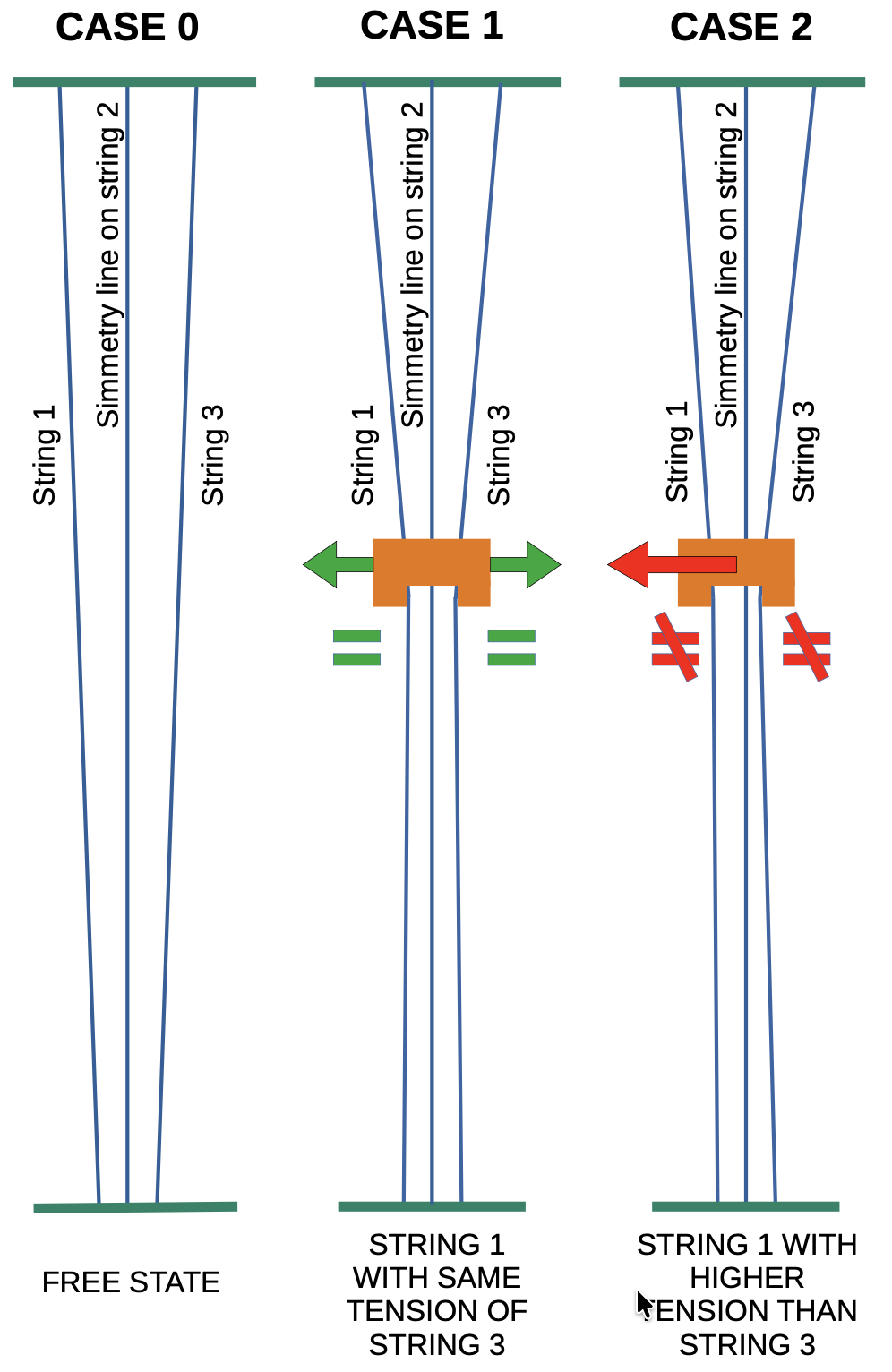
The method involves evaluating the lateral deflection of two strings by using a third string—positioned between them—as a visual reference. For instance, one might compare string 1 with string 3, using string 2 as the line of symmetry. The same procedure can then be applied to strings 2 and 4, using string 3 as a reference, and so on.
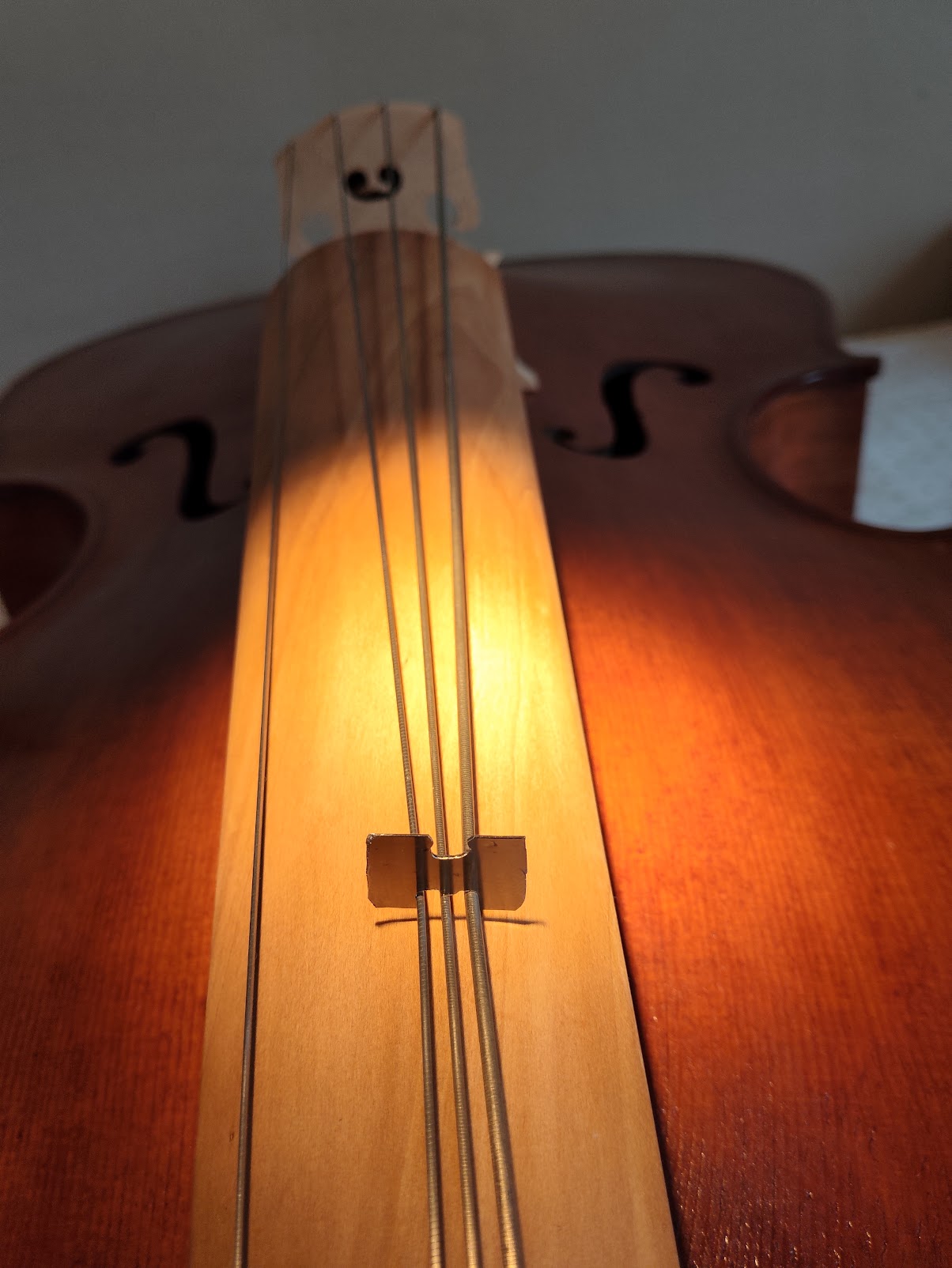
This requires a small tool made of a rigid material (such as metal, bone, or wood) featuring two grooves within a slot, which serve as lateral constraints for the two strings being tested. The intermediate string remains free, without making any contact (see photos below).
When the two strings under test (e.g., 1 and 3) are seated within the tool, an equilibrium state is established; the tool will shift toward the string with the higher tension. Only if the two strings have identical operating tension (not to be confused with their resting tension) will the tool remain stationary, with the space between the three strings distributed symmetrically.
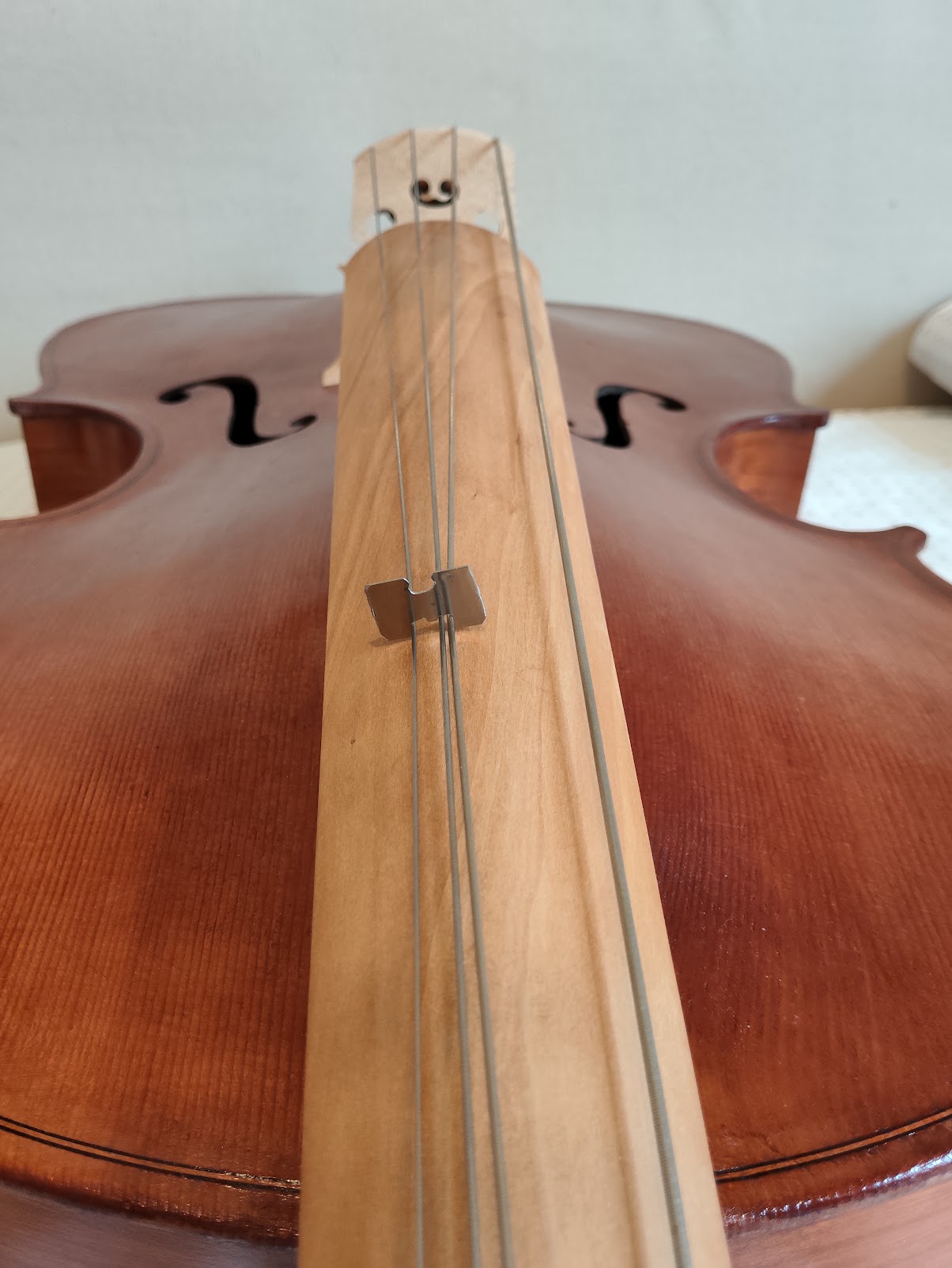
I have included a photo showing a comparison between the first and third strings of a cello, where the tension of the first string is approximately 19 kgf and the tension of the third string is approximately 14 kgf.
The displacement of the strings relative to the line of symmetry—represented by the second string—is clearly visible.
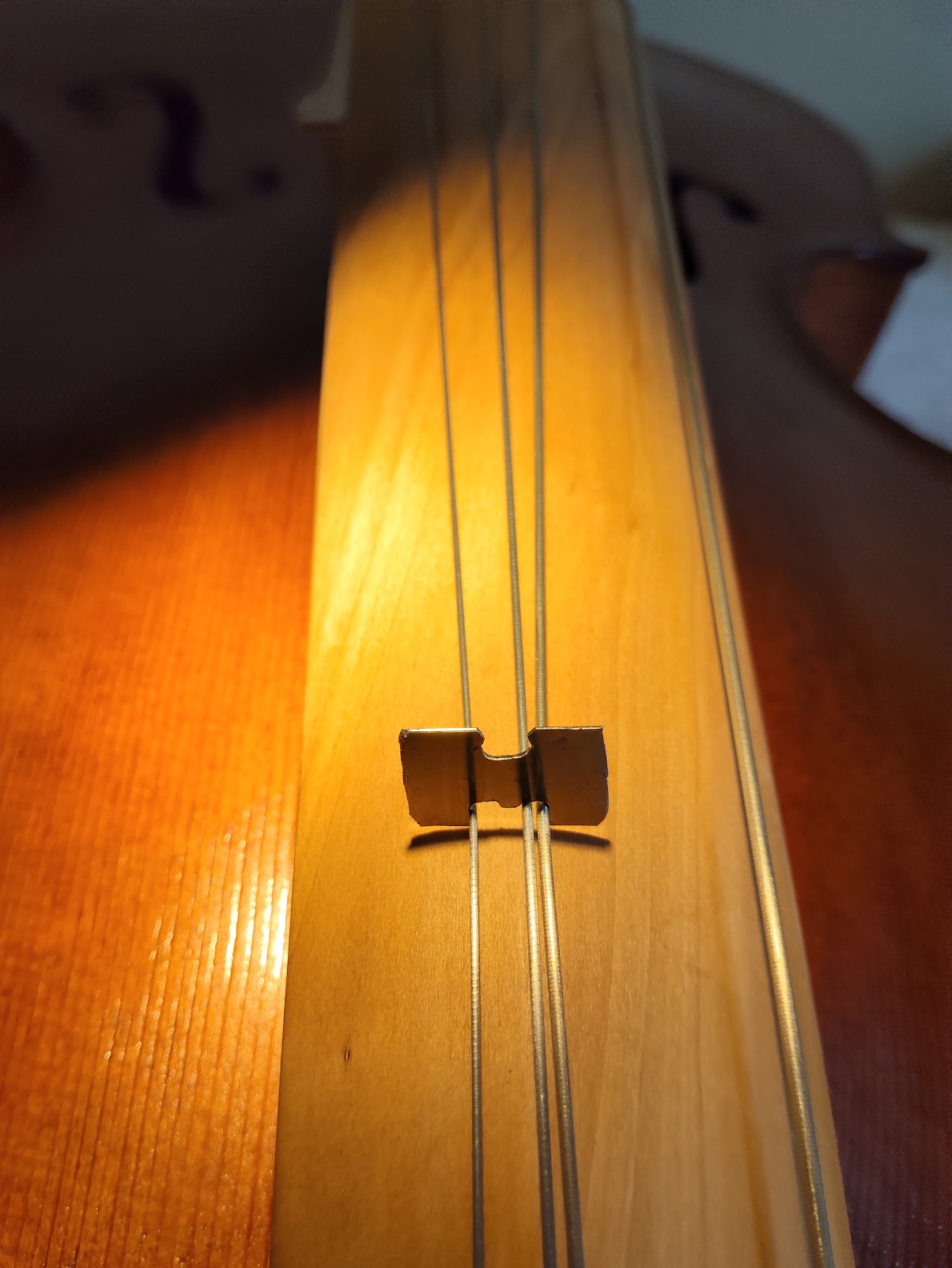
Now, I present a photograph showing a comparison between the second and fourth strings of a cello, where the tension in both strings is approximately 14 kgf.
In this instance, no lateral deviation is observed; instead, the system remains symmetrical with respect to the third (reference) string.
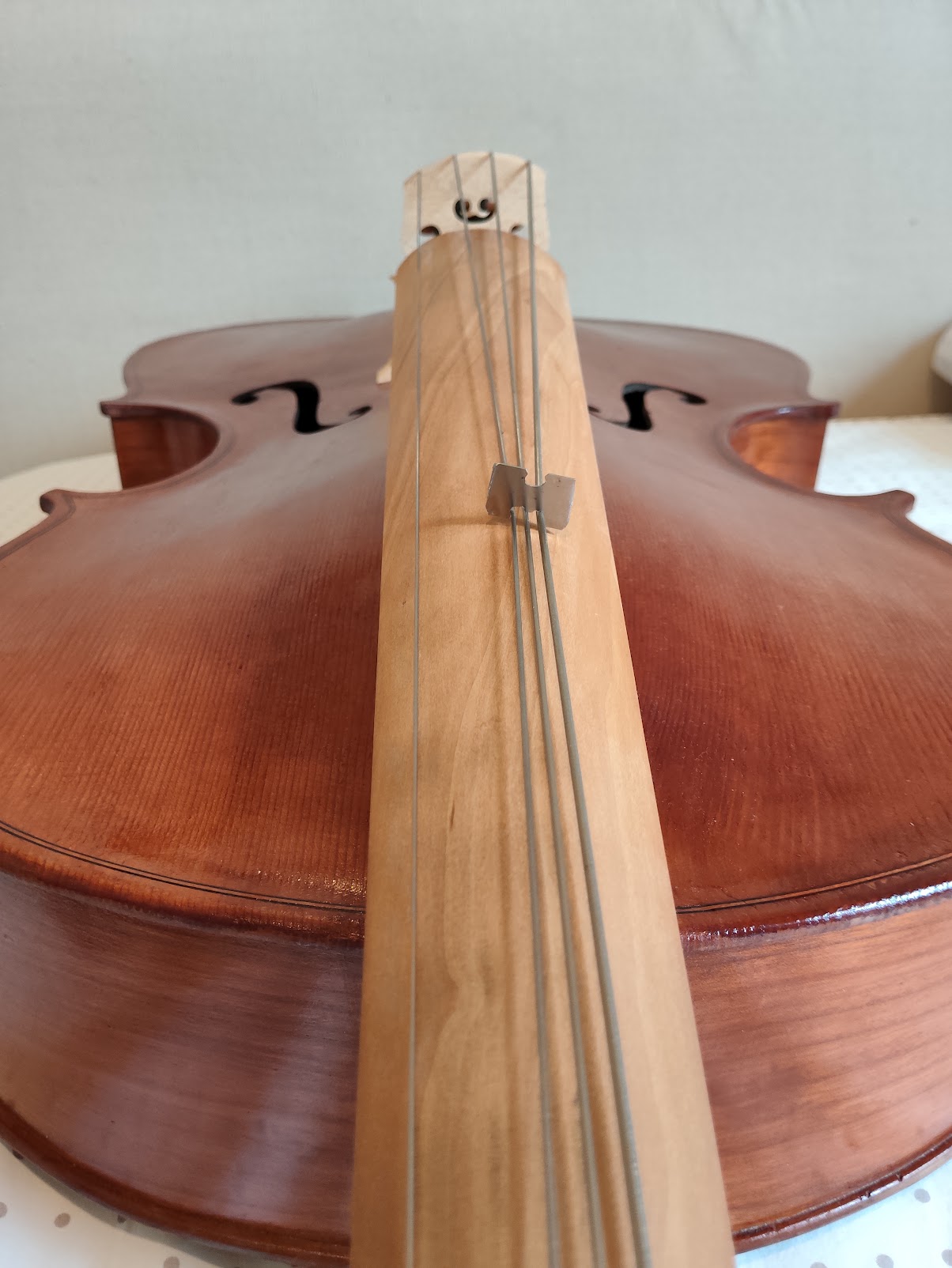
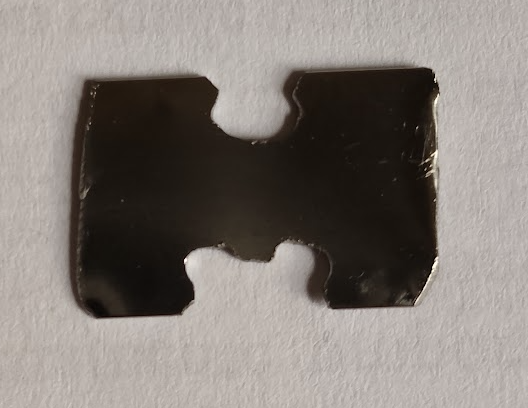
Here is a photograph of the simple tool used to check the tension of the two ropes. It features slots of different widths on either side, allowing it to accommodate ropes that vary significantly in size.
It is important not to damage the ropes, so the edge must be precisely shaped yet rounded.

This method can also be applied to two adjacent strings, without the need for an intervening third string. In this case, one must visually project the paths of the two strings to determine whether the intersection of their deflected shapes falls exactly on the virtual line of symmetry.
This measurement does not provide quantitative data; rather, it offers qualitative insight—helping, for example, to confirm or refute a tactile impression that the tension profile across the set is uneven.